Enabling Inclusive WASH Access for Urban Poor
Enabling Inclusive WASH Access for Urban Poor through Decentralized WASH Services Provisioning: A Social Cost Accounting and Equitable Tariff Approach
Access to safe, reliable, and affordable water, sanitation, and hygiene (WASH) services remains a critical challenge for India’s urban poor particularly those living in informal settlements. Despite the 2010 UN recognition of water and sanitation as a basic human right, millions remain underserved due to legal ambiguities, institutional constraints, and the structural limitations of centralized infrastructure.
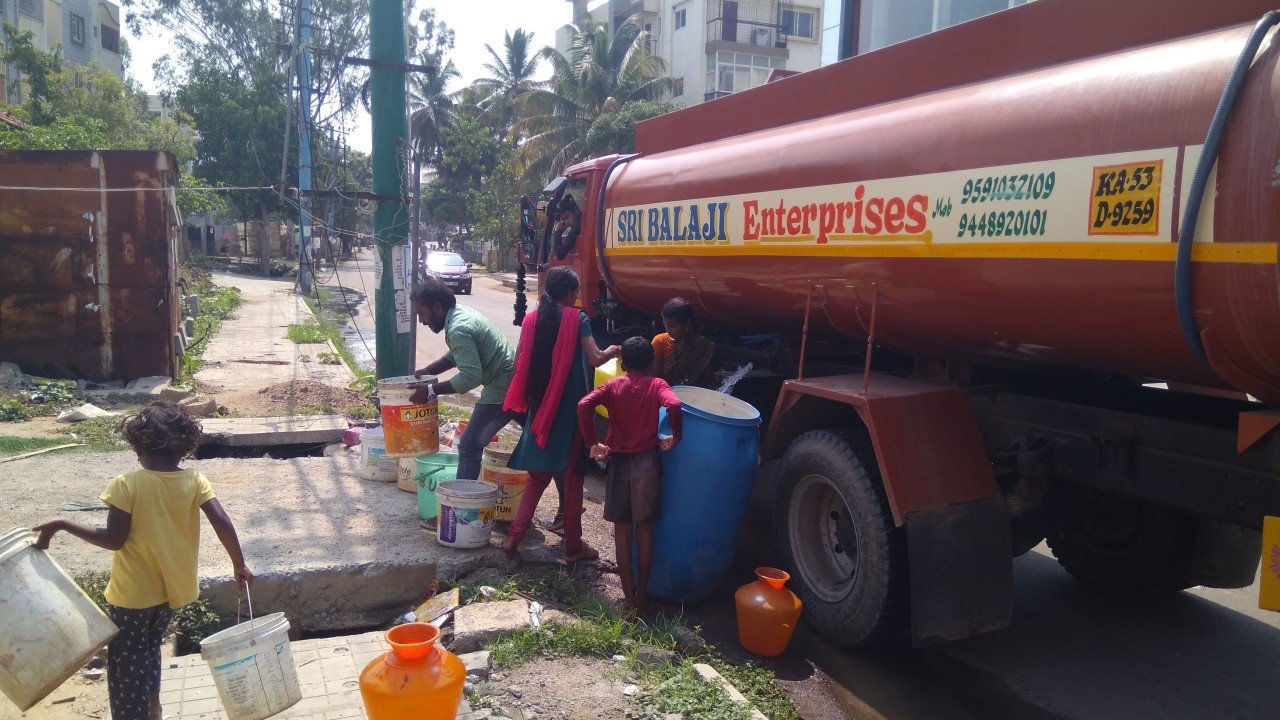
India’s policy landscape including the 74th Constitutional Amendment, AMRUT, Swachh Bharat Mission (Urban), and the Jal Jeevan Mission (Urban) recognizes the need for city-level accountability and inclusive service delivery. Yet, ground realities reveal that urban poor households routinely pay 3 to 10 times more per liter for water through informal mechanisms like private tankers or water vendors, as they are excluded from municipal networks. This creates deep inequities, where the most vulnerable populations bear the highest costs – both financially and in terms of health, safety, and dignity.
This article argues that decentralized WASH services provision can fill critical service gaps where centralized systems are infeasible. Centralized systems often exclude informal areas due to land tenure issues and high capital requirements, forcing low-income households to rely on costly, unregulated alternatives such as tanker water or community toilets. These coping strategies result in significant social, economic, health, and environmental costs—costs that are rarely captured in traditional financial planning.
Decentralized WASH systems, though more adaptable and community-centric, face their own challenges, including lack of subsidies, scalability issues, and high per-unit service costs. To address these limitations, this article highlights an integrated approach combining inclusive tariff design, social cost accounting, and blended finance mechanisms. These strategies can enable sustainable, equitable WASH access by recognizing and redistributing the hidden costs borne by marginalized communities.
Key policy suggestions include formal recognition of private informal decentralized service providers, performance-based subsidies, cross-subsidization mechanisms, gender and equity audits, and targeted affordability measures. Tariff design must move beyond cost recovery to support social justice and human dignity.
India’s urban WASH crisis is not only an infrastructure problem, it is a question of inclusion, accountability, and political will. Enabling pro-poor, decentralized WASH solutions is essential for building resilient, equitable, and sustainable cities.
Main Article
In 2010, the United Nations General Assembly formally recognized that access to safe and affordable water and sanitation is a fundamental human right. Every person is entitled to “sufficient, safe, acceptable, physically accessible, and affordable water for personal and domestic use.” This declaration frames the entire discussion, underscoring that lack of WASH (Water, Sanitation, and Hygiene) services is not only a development gap but a violation of basic human dignity
With that prelude, this article is focused on the urgent need to improve access to safe, reliable, and affordable water, sanitation, and hygiene (WASH) services for India’s urban poor, particularly those living in informal settlements. Developing countries such as India with high population growth in urban areas often lead to the establishment of informal settlements. Moreover, as these settlements are frequently illegal (without formal land tenure), the government has no obligation to provide formal water supply and sanitation services. According to a 2016 FSG report, nearly one-third to half of India’s urban population resides in such areas, lacking essential WSS infrastructure. The lack of access to reliable piped water supply from centralized systems forces nearly 43% of slum households (as per the same report) to seek their daily water requirements from various other means, contributing not only to their economic burden (high cost of water access vs. low income) but also health consequences (such as waterborne diseases). Centralized WASH infrastructure often fails in dense informal areas because of legal, technical, financial, and political barriers. Within this laissez-faire approach, various institutional arrangements have emerged to provide decentralized WASH services.
In India, state and city authorities are constitutionally tasked with ensuring basic level of services for all residents. Traditionally, “access” to urban services such as water, sanitation and waste management has been the most common metric used to gauge service delivery. However, access alone is an insufficient indicator, as it fails to capture quality, reliability, and adequacy of services.
For example, a household might technically have access to water supply, but if supply comes only twice a week, the family is effectively unserved for the remaining five days. In such cases, residents often turn to alternate sources, such as tanker water systems to fill the gap. These alternatives not only come at a higher personal cost but also carry significant health and climate externalities, for example, tanker water sourced from polluted locations (such as borewells located close to polluted lakes).
The cost of inadequate public services provision includes:
- Compel households to engage in private or self-provision such as installing water tanks, hiring private water suppliers etc.
- These coping mechanisms often represent a higher per-unit cost and create negative externalities (e.g., water over-extraction, mismanagement, health impact etc.).
- Over time, this results in a fragmented, inequitable urban infrastructure, where better-off households can afford substitutes while lower-income groups remain underserved.
The inability of public utilities to expand coverage or improve service quality, especially in rapidly growing peri-urban and informal settlements, imposes high social costs, including:
Health costs
- Receive lower quality service with wide variability ranging from vendors meeting basic safety standards to vendors providing poor quality unsafe water and sanitation services.
- Cannot access adequate quantity of water and sanitation services to meet basic hygiene needs resulting in poor health outcomes and disease outbreak
- Poor WASH services lead to water-borne diseases such as diarrhea, cholera, and typhoid.
- These translate to increased public health expenditures, lost income, and higher mortality/morbidity rates.
- For example, diarrheal diseases kill over 500,000 children under five annually (WHO).
Economic losses
- The time spent accessing water or dealing with illness reduces economic productivity, especially among women and informal workers.
- Suffer high-cost burden for WASH access often paying 3-10 times that paid by higher income groups connected to municipal piped water and sanitation (As per the WRR water report, households without access to municipal water self-provide or purchase water from private sources, such as tanker truck water which can cost up to 52 times as much as piped utility water).
- These losses are rarely accounted for in national accounts or project cost-benefit analysis.
Educational impact
- Lack of WASH in schools leads to absenteeism, especially among girls, impacting long-term human capital formation.
- These hidden opportunity costs are socially borne, not financially captured.
Environmental costs
- Inadequate sanitation contaminates water sources and harms ecosystems.
- Clean-up and restoration costs are deferred or pushed onto future generations (intergenerational inequity).
Gender and Equity Costs
- Suffer from unreliable and intermittent supply due to fragmented market and poor capacity in service management.
- Lack access to redressal mechanisms to address service concerns due to inadequate protections and regulatory oversight
- Traditional accounting ignores disproportionate burdens on women and marginalized groups.
- Social accounting calls for inclusion of non-monetized burdens such as dignity, safety, and well-being.
Climate cost from carbon-intensive / carbon-inefficient private coping mechanisms.
While conventional decision-making methods, such as financial or cash-flow accounting and return on investment, are commonly used for planning and implementing Government WASH services projects, they are not equipped to capture the above-mentioned social costs. These costs often go unmeasured because they lack clearly defined market prices. As a result, decisions based solely on traditional financial accounting may appear beneficial in the short term, but they can lead to significant and lasting social harm. As noted by Bebbington et al. (2001), ignoring these broader costs undermines long-term sustainability.
The World Bank and other reputable institutions (such as WHO) have often cited that “every 1 USD invested in WASH (Water, Sanitation, and Hygiene) can yield up to 4 USD or more in social and economic returns”. This figure typically reflects benefits such as:
- Improved public health (reducing disease burden, especially waterborne diseases)
- Increased productivity (fewer sick days, especially for women and children)
- Better educational outcomes (especially for girls when safe sanitation is available in schools)
- Time savings (especially where people, mostly women and children, spend hours collecting water)
A potential option for improving WASH services delivery to the urban poor is to involve the innovative decentralized WASH services ecosystem. Decentralized WASH solutions providers can achieve change at a speed faster than public utilities which are in many cases grappling with legacy solutions. Decentralized WASH solutions often emerge as viable alternatives, offering modular and community-appropriate options that can be deployed rapidly, require lower capital investment, and allow community involvement, which increases sustainability and adaptability in informal settlements.
Why Decentralized WASH Systems Are Viable Alternatives:
Technical, Economic, and Institutional Feasibility
- Suitable for urban informal settlements where centralized systems often fail.
- Offer modular, simple, and low-cost solutions that people can choose based on local needs
Deployment and Maintenance
- Can be deployed faster than large, centralized systems.
- High compatibility with self-help initiatives, encourages local ownership.
- Smaller networks lead to reduced risk of poor maintenance.
Cost-Effectiveness - Lower Capital Costs
- Off-grid WASH: ~US$132/person
- On-grid WASH: ~US$265/person
- Off-grid systems often blend public and private funding, attracting diverse investments.
Economic and Social Benefits
- Job creation and promotion of local businesses.
- Wise use of land, water, and energy.
- Health and Environmental Gains – mitigates some of the health risks due to poor service provision.
- Improves Climate and Environmental Resilience by reducing energy and infrastructure needs and minimizing distribution losses.
However, despite their benefits, decentralized WASH systems suffer from higher per unit costs, lack of government subsidies, difficulty in attracting skilled operators, and unstable demand due to seasonal migration and informal economies. These factors limit affordability and scalability, creating a paradox where the most vulnerable populations face the highest costs for WASH access.
Further, decentralized WASH solution entrepreneurs face a complex landscape of balancing financial sustainability with the public good of affordable WASH access. They operate in uncertain policy environments, compete against entrenched interests, and lack access to appropriate level of political economy support and scaled investment opportunities from development finance institutions. Additionally, the market for decentralized WASH services is fragmented and nascent, hindering innovation and growth.
As per World Resources Report working paper on Unaffordable and Undrinkable: Rethinking Urban Water Access in the Global South, households are generally spending 6 to 12% of their income on water and sanitation services while it is widely recommended that households typically should not spend more than 3 to 5% of their average household income on both water and sanitation services per month. Further, residents of informal settlements would spend a higher share of their monthly income on water access due to their lower-than-average incomes. A 2019 World Bank report on City-wide Inclusive Water Supply argues that providing piped water supply from source to tap costs about US$265 per person, with annualized capital subsidies of US$25.6 per capita. Additionally, operational subsidies to public utilities add US$16.6 per person annually. In total, individuals with piped connections receive US$42 in annual subsidies, while the unconnected, typically the poor living in informal settlements receive none, highlighting a stark inequity in water service financing. The report estimates that off-grid water supply costs about US$132 per person, roughly half the US$265 per person needed for on-grid supply. While on-grid investments are mostly publicly funded, off-grid solutions can potentially blend public and private financing, attracting additional resources. However, there is an urgent need of either reallocating public subsidies to decentralized WASH service models or integrating decentralized WASH service models within the larger framework of city-wide water services delivery keeping in mind the affordability context of low-income informal settlements. Cities must try to reconcile the gap between low incomes, minimum recommended amounts of water consumption, and commercial pricing by introducing efforts to combine decentralized WASH services model and subsidy integration.
Private sector decentralized WASH solutions providers are frequently more expensive on a per-unit basis than centralized ones, pushing disproportionate financial burdens onto low-income households. Additionally, subsidies and regulatory mechanisms often exclude these providers, ignoring the significant social costs such as health, time, safety that the urban poor bear due to inadequate services.
Key Issues
- High Relative Tariff Burdens Urban poor in informal settlements pay 3 to 10 times more per liter than formal network users. Unregulated decentralized providers pass full costs to end-users.
- Lack of Social Cost Accounting Public policy and urban accounting frameworks omit indirect costs such as disease burden, lost productivity, and compromised safety.
- Subsidy Exclusion Government subsidies typically target piped utilities and miss informal or decentralized systems.
- Gender and Vulnerability Impacts Women and girls are disproportionately affected by inadequate WASH, facing additional health, safety, and dignity-related burdens.
Decentralized WASH services are indispensable for urban resilience and inclusivity. However, unless policies evolve to recognize their legitimacy, reflect social costs, and support equitable tariffs, the urban poor will continue to pay more for less. Policymakers must institutionalize social cost accounting and pro-poor subsidies to achieve universal, inclusive WASH access.
- Recognize Decentralized Providers Formally integrate them into urban WASH policy and service plans. Establish licensing or recognition frameworks that maintain flexibility.
- Incorporate Social Cost Accounting Measure and include the indirect economic, social, and health costs of poor WASH access in public finance and planning tools.
- Design Pro-Poor Tariff and Subsidy Models Introduce targeted subsidies (e.g., vouchers or OBA schemes) for decentralized service users. Enable cross-subsidization between high-income and low-income service zones.
- Encourage Inclusive Financing Mechanisms Establish municipal funds or PPP models to support decentralized infrastructure in informal areas.
- Mandate Gender and Equity Audits Require gender-disaggregated impact assessments and affordability studies in tariff reforms.
Moreover, designing a water tariff structure for decentralized service providers in informal settlements is complex but crucial for ensuring sustainability, affordability, and equity. Water tariff structures often fail to consider the affordability constraints of urban poor and marginalized communities living in informal settlement. In the context of decentralized water service provision in informal settlements, tariff design is not just a financial mechanism, it’s a tool for social justice and human dignity. Many residents in these areas face precarious incomes, irregular employment, and limited access to formal infrastructure. A one-size-fits-all tariff risks deepening exclusion. Following principles typically should be considered for inclusive WASH tariff design.
- Affordability Tariffs must be affordable for low-income households. Establishing acceptable benchmarks for water affordability (e.g., not exceeding 3 to 5% of household income – Reference – WHO).
- Equity and Pro-Poor Targeting Use subsidies or differential pricing to support those most in need. Prioritize inclusion of informal settlements and disadvantaged groups.
- Cross-Subsidization Structure tariffs so that wealthier users or commercial users subsidize low-income households.
- Transparency and Community Engagement Involve communities in tariff design and reviews. Publish tariff structures and service commitments clearly.
- Cost Recovery Sufficient to cover operation and maintenance (O&M), and ideally capital recovery (partially or fully) – this can be achieved through blended finance model and incorporation of innovative business models# Enables sustainability and reinvestment in the system.
- Equity and Inclusivity Ensure the poor are not disproportionately burdened. May include lifeline tariffs or cross-subsidies.
- Transparency and Simplicity Simple, understandable billing to build trust in decentralized providers. Incentives for efficient water use and conservation.
Inclusive WASH tariffs are critical to achieving universal and equitable access. Tariff structures must move beyond cost recovery to reflect social justice, human rights, and developmental priorities. Thoughtful, inclusive design can enable sustainable services without leaving the poor behind. Following are different types of inclusive tariff models that should be explored for private decentralized services delivery.
While designing the tariff models, special considerations should be provided for the following:
- Gender: Women and girls suffer most from inadequate WASH. Inclusive tariffs must address privacy, safety, and menstrual needs.
- People with Disabilities: Tariffs and services must account for physical accessibility and assistive infrastructure.
- Rural Areas: Often commercially unviable, requiring sustained public finance and community management models.
Policy Recommendations
- Embed affordability thresholds in national WASH policies.
- Develop integrated tariff and subsidy frameworks.
- Promote performance-based subsidies (e.g., output-based aid).
- Invest in data systems to monitor access, affordability, and equity impacts.
Conclusion: Access to safe, affordable, and reliable water and sanitation is not merely a development target, it is a fundamental human right. Yet, millions of India’s urban poor, particularly those living in informal settlements, remain systematically excluded from equitable WASH services. Centralized infrastructure often bypasses these communities due to legal, financial, and institutional constraints, forcing them to rely on high-cost, low-quality alternatives that compromise their health, dignity, and economic well-being.
Decentralized WASH solutions offer viable and necessary alternatives, which are flexible, scalable, and responsive to local needs. However, without inclusive tariff structures, targeted subsidies, and recognition within formal policy frameworks, these solutions risk replicating the very inequities they aim to solve.
To achieve equitable and resilient urban WASH services delivery in short to medium term, India must rethink its approach to WASH finance and planning. This requires moving beyond narrow cost-recovery models to embrace social cost accounting, blended financing mechanisms, and pro-poor tariff reforms. Public subsidies should be reallocated based on need and impact and not just delivery modality, so that off-grid households in informal settlements receive the same level of support as those connected to centralized systems. Policies must centre the needs of the most vulnerable particularly women, children, and the urban poor and thereby, ensuring that no one is left paying more for less. A just and sustainable urban future depends on our ability to redesign WASH systems not just for efficiency, but for equity and human dignity.
References
- FSG: Informal Housing and Property Rights in India (https://www.fsg.org/publications/informal-housing-inadequate-property-rights)
- Smita Misra, Bill Kingdom (2019) Citywide Inclusive Water Supply: Adopting Off-Grid Solutions to Achieve the SDGs. World Bank
- Diana Mitlin, Victoria A. Beard, David Satterthwaite, Jillian Du (2019) Unaffordable and Undrinkable: Rethinking Urban Water Access in the Global South. World Resources Institute
- Srikanth Shastry, Sahana Goswami, Anil Markandya, Aarsi Sagar, Indro Ray, Zeba Aziz, Sandeep Paul, Madhav Pai, Anirudh Tagat, Apurba Chaterjee (2018) Towards Smarter Service Provision for Smart Cities: Accounting for the Social Costs of Urban Service Provision. World Resources Institute India
- D Ditz, J Ranganathan, R D Banks (1995) Green Ledgers: Case Studies in Environmental Accounting. World Resources Institute
- UN System of Environmental Economic Accounting (SEEA) (https://seea.un.org/)
- Strong System and Sound Investments: Evidence on and Key Insights into Accelerating Progress on Sanitation, Drinking Water and Hygiene. The UN-Water global analysis and assessment of sanitation and drinking-water (GLAAS) 2022 report. World Health Organization
- World Bank Group (2017) Reducing Inequalities in Water Supply, Sanitation, and Hygiene in the Era of the Sustainable Development Goals Synthesis Report. WASH Poverty Diagnostic Initiative.
- Xavier Leflaive, Marit Hjort (2020) Addressing the social consequences of tariffs for water supply and sanitation. OECD Environment Working Papers No. 166