

Fifty Years of Rising Heat in India
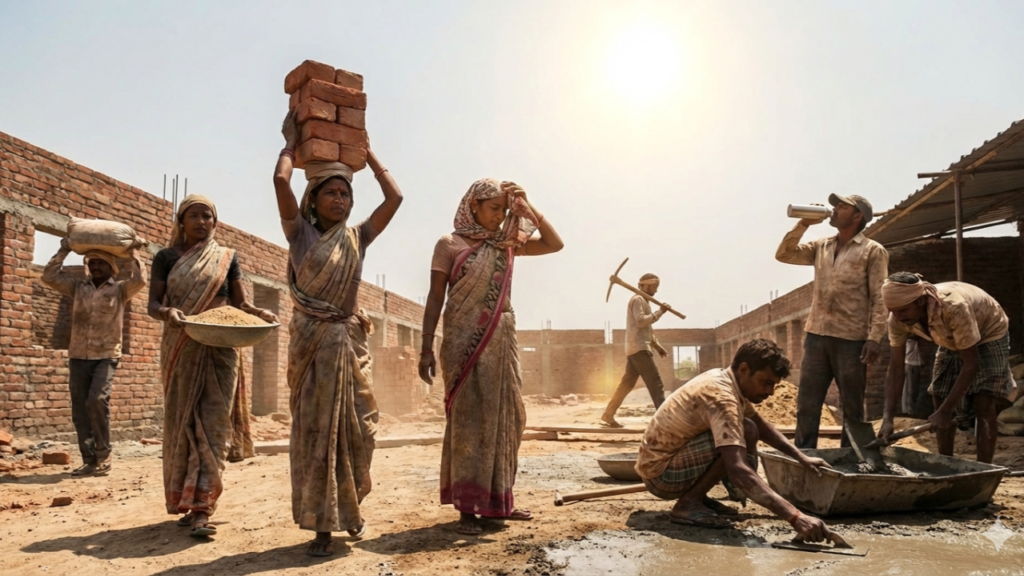
Fifty Years of Rising Heat in India: Trend of Heat Extremes and Pathways for Resilience
1. Understanding India’s Warming Climate
India’s climate is undergoing a clear and accelerating transformation. Rising heat is no longer visible only in long-term averages or rare extremes; it is now embedded in everyday temperature patterns that shape daily life, ecosystems, and economic activity. With its large population, diverse geography, and strong reliance on seasonal rhythms, India is particularly exposed to these changes. Over the past five decades, extreme heat in India has shifted from being an occasional anomaly to a regular and persistent condition.
Temperatures once considered unusually high now occur more frequently and last longer. Winters are becoming shorter, summers are extending and intensifying, and the natural cooling periods that once offered relief are steadily shrinking. Together, these changes point to a fundamental reordering of how heat behaves across the country.
To understand this transformation, this article analyses 50 years of daily temperature data (1975 to 2024) using the ridgeline plotting method . The data from 1981 to 2000 have been used as the reference period. By linking decadal ridgeline plots, monthly anomaly heatmaps, and seasonal mean and median shifts, the analysis turns abstract warming trends into a forensic record of collapsing seasonal boundaries. The ridgeline plots capture a sustained drift toward higher temperatures, while the heatmaps reveal that warming is no longer confined to specific seasons or extreme years. Instead, extreme heat has become a persistent feature of the calendar, steadily redefining what is considered “normal.” Understanding these temperature anomalies is therefore no longer merely a scientific exercise. It is a prerequisite for effective planning and governance in a climate where extreme heat has become the new normal, reshaping risks to health, livelihoods, food security, and economic stability. As India continues to grow and develop, planning for the future must account not just for warmer temperatures, but for a climate in which high heat is increasingly the rule rather than the exception.
*Please note that a national-average approach hides local temperature minimum and maximum extremes. It only tells us the trend of average temperature at a country level. The local level variations of temperature extremes could be much worse.
2. A Steady Shift Toward Higher Temperatures (1975-2024)
The ridgeline plots (Figure 1) are derived from 50 years of daily temperature data (1975–2024) obtained from IMD net CDF datasets, with anomalies calculated relative to the 1981 to 2000 baseline. Temperature anomalies are expressed in degrees Celsius (°C), where a value of 0 (zero) represents the baseline average. Values plotted to the right of zero (+1, +2, +3) indicate daily average temperatures warmer than the baseline, allowing changes in temperature patterns to be tracked over time. The shape and position of each distribution reflect both the frequency and persistence of temperature conditions in a given year. A higher peak indicates that temperatures remained close to that anomaly value for much of the year, while shifts in the entire distribution reveal how India’s thermal baseline has progressively moved toward hotter conditions over the past five decades.
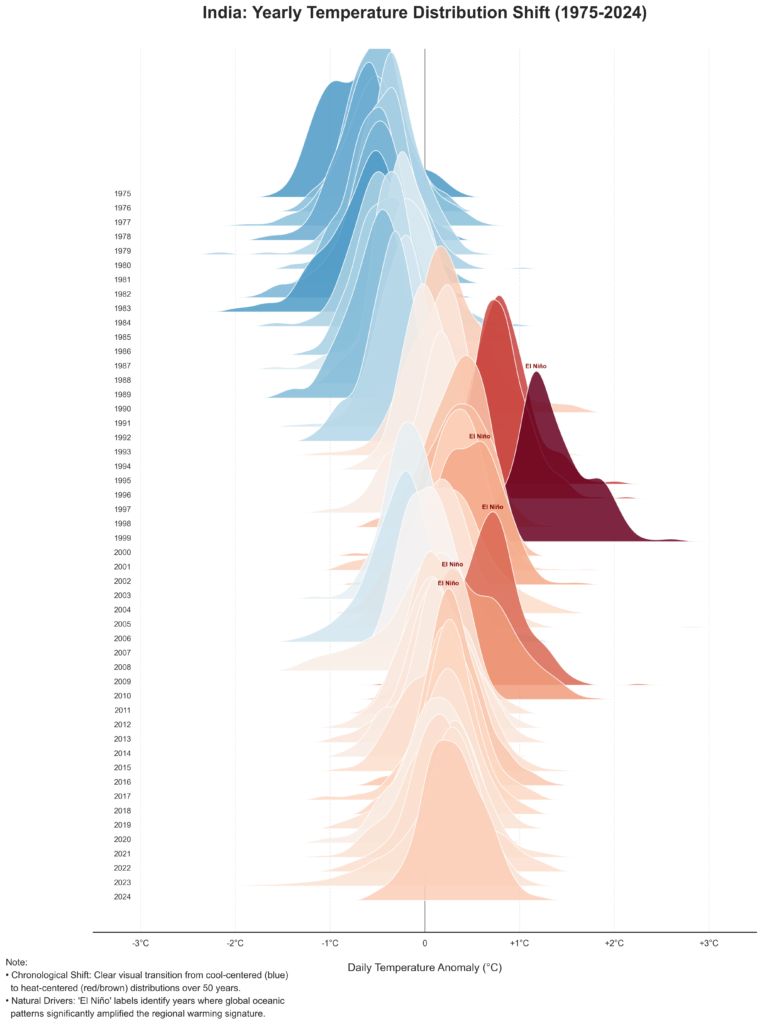
Figure 1: Annual distributions of daily surface air temperature anomalies (1975–2024), referenced to baseline (1981–2000)
The above ridgeline plot (Figure 1) indicates the following:
- A Structural Shift from the “Normal”: The entire temperature distribution has progressively shifted to the right. During the 1970s and 1980s, peak temperatures clustered around or below the zero anomaly line. Today, the distribution’s centre has moved so far that temperature levels once considered rare extremes (+1.5°C to +2°C) now represent the most common daily conditions.
- Persistent Warming and the Loss of Recovery Periods: Earlier decades displayed substantial blue segments, indicating cooler intervals that allowed systems to recover. In recent years, these recovery periods have largely disappeared, replaced by sustained heat. Warming is no longer episodic or confined to isolated “hot years”; the baseline itself has shifted, with today’s coolest days often exceeding the average temperatures of the 1980s.
- El Niño as an Amplifier, Not the Cause: Years influenced by El Niño events (notably 1995, 1998, 2014, 2015, and 2024) show the most pronounced rightward displacement. This demonstrates that natural climate variability now acts as an amplifier on top of an already elevated warming baseline, pushing temperatures into extreme ranges.
- Escalating Extremes and Real-World Impacts: As the upper tails of the distributions extend toward +3°C, extreme heat events become more frequent and intense. This shift has direct consequences such as intensifying droughts, increasing coastal flood risk through stronger cyclones, and accelerating the degradation of vulnerable ecosystems such as coral reefs.
- Rising Heat Mortality as a Human Signal: Mortality data from IMD and NDMA closely track these thermal shifts, translating abstract temperature changes into human consequences. El Niño amplified years coincide with sharp spikes in heatwave deaths (1,677 in 1995, 3,058 in 1998, 1,677 in 2014, and 2,040 in 2015) far exceed many surrounding years. This alignment confirms that as the thermal baseline rises, extreme heat increasingly manifests not as rare anomalies but as recurrent, deadly conditions affecting public health at scale.
3. From Occasional Heat to Year-Round Warmth
To understand India’s evolving climate, it is essential to identify which months are experiencing the breakdown of seasonal rhythms. While the ridgeline plot captures the broad structural shift with daily temperature distributions steadily moving rightward, the monthly anomaly heatmap (Figure 2) provides a forensic, month-by-month view of how this transformation unfolds across the year. In this analysis a temperature anomaly represents a departure from “normal,” where “normal” is defined using the 1981–2000 historical baseline.
- Positive anomaly (red/orange): The month was warmer than the long-term average for that same month during 1981–2000.
- Negative anomaly (blue): The month was cooler than the historical monthly average.
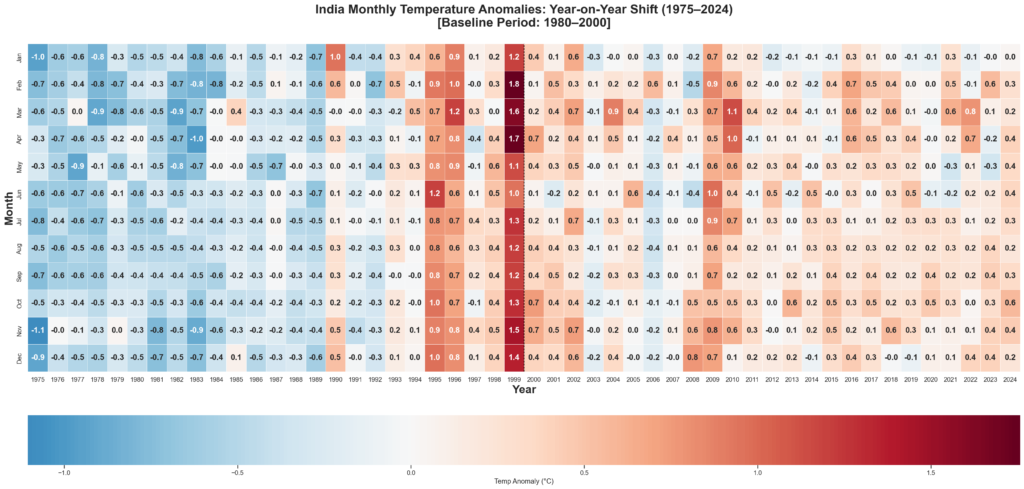
Figure 2: Monthly surface air temperature anomalies compared to the baseline (1981–2000)
Building on the monthly heatmap patterns, the following statistical analysis of mean and median temperatures examines how seasonal conditions have shifted over time, providing a robust empirical foundation for understanding India’s current climatic trajectory. Changes in seasonal averages confirm that warming is no longer episodic or confined to isolated extreme years. Instead, it reflects a systematic rise in seasonal temperature levels. As the seasonal data below illustrates, every season now begins from a higher thermal starting point. Winters, once critical for cooling and recovery, are markedly warmer, pre-monsoon and monsoon periods have intensified beyond their historical stabilising roles and post-monsoon months display the strongest and most persistent warming signal.
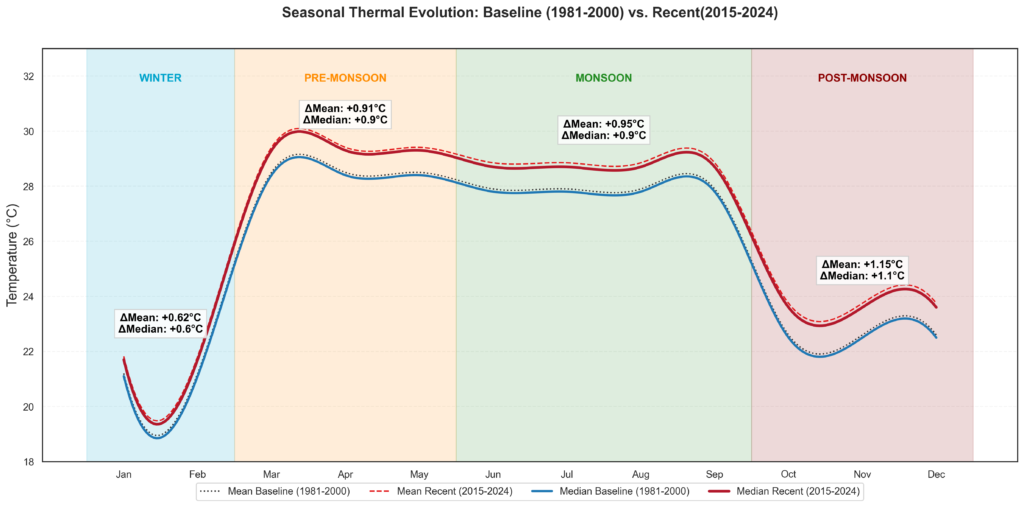
Figure 3: Seasonal temperature evolution: Baseline (1981–2000) vs. Recent (2015-2024)
- Winter (January–February: A Rising Baseline): Monthly anomaly patterns show that January and February, once dominated by negative anomalies of –0.8°C to –1.0°C during 1975–1990, have shifted decisively toward persistent positive anomalies in the last decade. February now frequently exceeds +0.8°C, raising the starting point of the annual temperature cycle. This early year warming erodes winter’s traditional cooling buffer, reducing physiological and ecological recovery time and effectively extending the heat season before summer even begins.
- Pre-Monsoon (March–May: The Collapse of Spring): March has emerged as one of the fastest warming months, transitioning from historical anomalies near –0.6°C to frequent exceedances in the +1.1°C to +1.6°C range in recent years. This rapid escalation has compressed the seasonal transition, effectively bypassing spring and pushing the climate directly from winter into extreme pre-monsoon heat. Sustained anomalies of +0.7°C to +1.3°C now persist across entire months.
- Monsoon (June–September: Diminished Cooling Capacity): The monsoon historically acted as a thermal reset, but recent anomaly patterns show this function weakening. June and July now frequently register positive anomalies, with June 2024 remaining warmer than the historical average despite peak rainfall. As the background temperature baseline continues to rise, the cooling influence of monsoon precipitation is increasingly outweighed by accumulated heat.
- Post-Monsoon (October–December: Heat That No Longer Dissipates): The most consequential shift appears in the post-monsoon months. October and November, once reliably cool, have transitioned to sustained positive anomalies, with November reaching +1.5°C in extreme years and maintaining +0.5°C to +0.8°C warming in recent seasons. This trapped residual heat extends the high temperature regime into the end of the year, sustaining elevated sea-surface temperatures and increasing the energy available for late-season cyclones.
Further, the “forensic" view reveals that warming is no longer an episodic event but a persistent shift that has fundamentally altered the country's seasonal rhythms. The most alarming signal of this transformation is the explosive increase in extreme heat frequency surging from fewer than one month per year in the 1970s to more than seven months in the last decade (Figure 4).
- The Vanishing "Reset" (1975–1984): In this period, extreme heat was an anomaly (<1 month), allowing winter and the monsoon to act as critical thermal "resets" for the environment and public health.
- Expansion of Early Heat (1985–2004): The shift to "Early Spring Warming" (~1.5 months) and then "Pre-Monsoon Heat" (~3 months) signifies the compression of the mild spring season.
- The Loss of Recovery (2005–2024): As heat frequency surged to "Longer Hot Summers" (~5 months) and finally to "Year-Round Extreme Heat" (>7 months), the period available for natural cooling has been decimated.
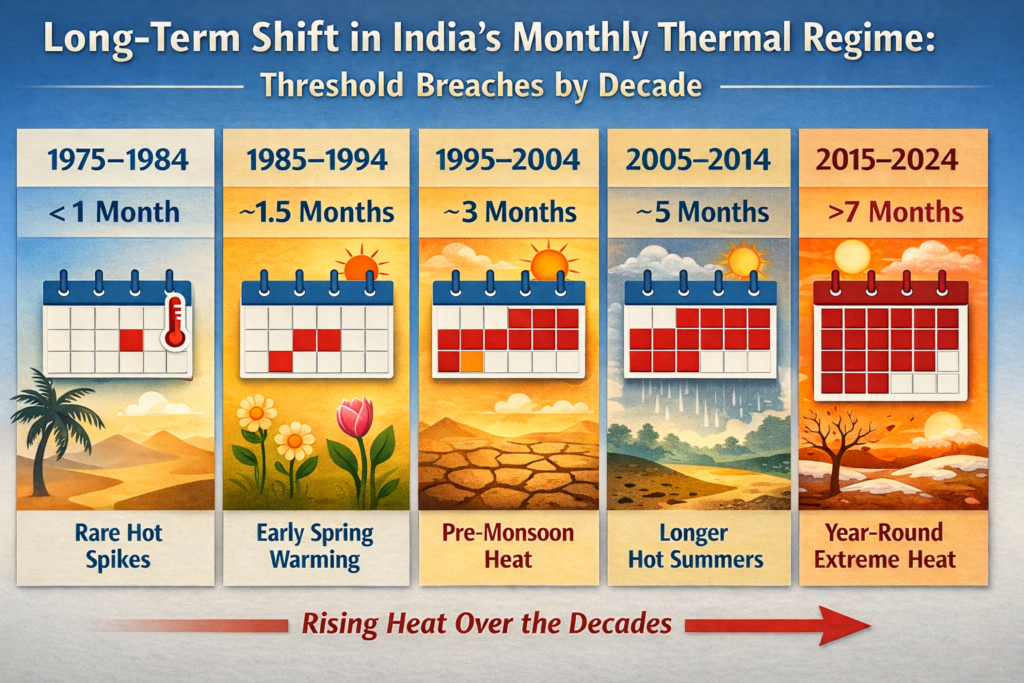
Figure 4: India’s Calendar is Turning Red: Extreme Heat Now Dominates More Months Each Year
4. Why Heat Resilience Must Start with the Most Vulnerable
India’s transition into a high heat climate is already generating far-reaching and cascading consequences. Rising temperatures interact with and intensify other climate stresses including heatwaves, drought, water scarcity, crop productivity losses, soil degradation, rising energy demand, ecosystem stress, and increased flood and cyclone risks placing mounting pressure on development gains across sectors. While these impacts are interconnected, their effects are not experienced evenly across society.
The evidence consistently shows that the burden of extreme heat falls disproportionately on those with the least capacity to adapt: the elderly, low income households, outdoor and informal workers, residents of informal settlements, and small and marginal farmers (WRI India; NDMA). For these communities, heat is no longer an episodic hazard but a daily and structural risk that directly undermines health, livelihoods, and productivity. Addressing extreme heat for the most vulnerable is therefore not only a moral imperative, but a critical prerequisite for India’s long-term economic stability, workforce resilience, and social sustainability.
This analysis shows that India has moved beyond a climate of episodic heat shocks into a state of persistent, year-round thermal stress. As seasonal cooling windows disappear, traditional assumptions about recovery, productivity, and safety no longer hold. In this context, responding to heat as an emergency is insufficient. What is required is a systemic, people-centred framework that embeds heat resilience into planning, governance, and investment decisions at every level.
The five action pillars outlined, placing heat risk at the centre of policy, designing cities for heat, protecting workers and livelihoods, strengthening community preparedness, and using climate data for early action together provide a practical pathway for safeguarding vulnerable communities.
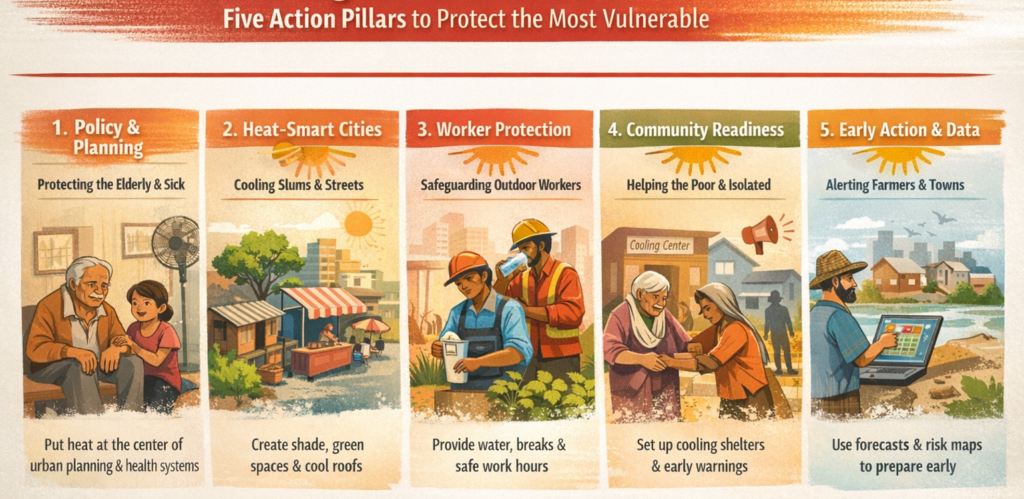
Figure 5: Five Action Pillars for Building Heat Resilience in India
5. Five Action Pillars for Heat Resilience in India
- Put Heat Risk at the Centre of Policy and Planning:For an elderly person living alone or a child in a poorly ventilated classroom, heat is no longer seasonal; it is a daily health risk (NDMA; WRI India). Yet extreme heat is still treated as a short-term weather event. Recognising heat as a core public safety and development risk, and embedding Heat Action Plans into urban planning, health systems, labour laws, and infrastructure design, is essential to preventing avoidable illness and death (NDMA, 2019; IMD).
- Design Cities for Heat, Not Just Growth:In dense settlements and informal neighbourhoods, concrete, traffic, and tin roofs amplify heat far beyond city averages. A street vendor or a family under a metal roof experiences temperatures that never truly fall, even at night (Scroll.in; WRI India). Urban areas must be designed to cool through trees, shade, reflective roofs, water bodies, and climate responsive building codes so that growth does not come at the cost of survivability (WRI India; CEEW).
- Protect Workers and Livelihoods from Heat Stress:For millions of Indians, heat is a workplace hazard. Farm workers, construction labourers, factory workers, and street vendors cannot “stay indoors” when temperatures rise (WRI India; ILO). Without protections, heat silently erodes productivity, income, and health. Treating heat as an occupational risk, with safe work hours, rest breaks, water access, and income protection, is critical to protecting livelihoods in a warming economy (ILO, 2019).
- Strengthen Community-Level Heat Preparedness:Heat deaths often occur in silence when elderly people are unseen, when water runs out, or when power fails (NDMA; ICMR). Community level actions save lives: early warnings, cooling shelters, drinking water access, health outreach, and simple neighbour check-ins. As heat becomes persistent, community care becomes climate adaptation (NDMA; WRI India).
- Use Climate Data to Act Early, Not React Late:India has strong climate data, but it is too often used after damage has already occurred. Heat forecasts, seasonal outlooks, and local risk maps must guide early decisions; on health staffing, water and power supply, crop planning, and disaster readiness (IMD; World Bank). In a high-heat climate, acting early is safer, cheaper, and more effective than responding late (WRI India).
6. Why This Matters Now
References
- India Meteorological Department (IMD), Ministry of Earth Sciences, Government of India. Gridded Temperature Data (1.0° x 1.0°). https://www.imdpune.gov.in/cmpg/Griddata/Max_1_Bin.html
- India Meteorological Department & NDMA. (2024). Heat Wave Action Plan & Early Warning Systems. Retrieved from https://www.preventionweb.net/media/113683/download
- Copernicus Climate Change Service (C3S). (2025). Global Climate Highlights 2024 & 2025. European Centre for Medium-Range Weather Forecasts (ECMWF). https://climate.copernicus.eu/global- climate-highlights-2025?utm_source=socialmedia&utm_medium=LI&utm_campaign=global- climate-highlight 2025&utm_id=GCH-2025
- Council on Energy, Environment and Water (CEEW). (2025). Mapping Climate Risks and Impacts of Extreme Heatwave Disaster in Indian Districts. Retrieved from
https://www.ceew.in/publications/mapping-climate-risks-and-impacts-of-extreme-heatwave- disaster-in-indian-districts - National Disaster Management Authority. (2019). Heat Wave Preparedness Booklet. Government of India. Retrieved from https://ndma.gov.in/sites/default/files/IEC/Booklets/HeatWave%20A5%20BOOK%20Final.pdf
- National Disaster Management Authority (NDMA): Heat Wave: Prevention and Management Action Plan, compiled from Revenue/Disaster Depts & IMD reports.
- World Resources Institute India. (2022). Measuring and Mapping Heatwave Risk in India. Retrieved from https://wri-india.org/blogs/measuring-and-mapping-heatwave
- World Resources Institute India. (2025). INSIGHTS 2024. Retrieved from https://wri- india.org/sites/default files/2025 04/INSIGHTS-2024.pdf